
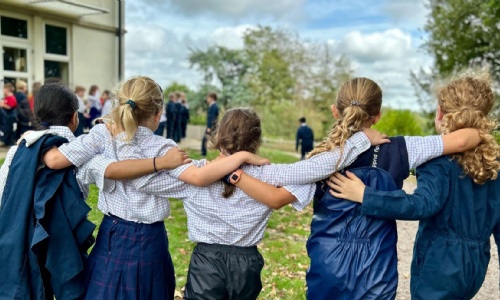
New routines, new form groups, new friendships, a new pencil case, a new Form Tutor, a new timetable, and perhaps even a new seating plan. The start of a new academic year is often filled with exciting opportunities and fresh beginnings. For many children, these changes bring feelings of anticipation and enthusiasm, creating that familiar sense of being ‘bubbly’, which we often describe as being in the Yellow Zone of the Zones of Regulation.
For some children, however, all this newness can feel overwhelming. Returning to school after a long break can bring feelings of worry, uncertainty, or anxiety. These emotions are both common and entirely understandable.
During the holidays, children become accustomed to the comforts and routines of home life. The transition back to early mornings, structured days, academic expectations, and the social demands of school can take time. In many ways, it is similar to how adults sometimes feel at the end of a holiday or before returning to work after an extended break.
Anxiety is a natural human emotion. It is our body's way of responding to situations that feel uncertain, challenging, or unfamiliar. At the start of a new school year, children may worry about a variety of things. They might feel anxious about making new friends, being separated from family, navigating changes in friendship groups, coping with more demanding subjects, or adjusting to different teachers and expectations. Others may be returning to school after an illness, a family change, or simply after enjoying the slower pace of the summer holidays.
Back-to-school anxiety can present itself in different ways. Some children may struggle to get up in the morning or become reluctant to attend school. Others may complain of headaches, stomach aches, or difficulty sleeping. Increased clinginess, irritability, unexplained tears, anger, withdrawal from others, or difficulties concentrating can also be signs that a child is finding the transition challenging.
The reassuring news is that these feelings are usually temporary. As routines become familiar and children settle back into school life, anxiety often decreases naturally. Within a few weeks, most children have adapted and gained confidence in their new environment. In fact, many pupils tell us that the things they worried about most never turned out to be as difficult as they had imagined.
Through our PSHE lessons and conversations with pupils during the first few weeks of term, we regularly hear encouraging reflections such as: "Maths wasn't as scary as I thought it would be" or "I didn't want to be in this form at first, but now I really like it." These comments serve as an important reminder that anxiety often thrives on uncertainty. Once children have experienced a situation and seen that they can cope, their confidence grows and their worries begin to fade.
Of course, while most children settle quickly into the new term, there are occasions when anxiety persists beyond the initial few weeks. If this is the case, it is important that parents share what they are seeing at home with their child's Form Tutor or teacher. Open communication between home and school allows us to build a clearer picture of a child's experience and to provide support at an early stage.
We are fortunate to have a range of pastoral and wellbeing provisions available within school. All the children have engaged in team building activities within their new classes during the first few weeks back. The PSHE programme focuses on the topic ‘Being Me in My World’ for the first half term, and each year group builds on this in a cyclical way during their weekly lessons. This year, we are delighted to offer a Nurture Forest School session, which runs for 90 minutes on Monday mornings. This provides children with an opportunity to connect with others in a smaller, supportive environment, helping them to feel settled, build confidence, and start the week positively.
For some children, additional support from our Learning Support Team may be beneficial. Others may benefit from working with one of the many staff members across the school who are highly trained in pastoral care and emotional wellbeing. Whatever the need, our aim is always to work collaboratively with families to ensure that every child feels safe, supported, and able to thrive.
The most important message is that we can only help with concerns that we know about. If your child is struggling with the transition back to school, please do get in touch. By working together, we can identify appropriate strategies and support, helping children to develop the confidence and resilience they need to enjoy school and achieve their full potential.
As parents and educators, one of the most valuable things we can do is acknowledge children's feelings without dismissing them. Listening, offering reassurance, maintaining predictable routines, and encouraging a positive mindset can all help children develop resilience and confidence. Most importantly, we can remind them that feeling nervous about something new is not a sign of weakness; it is a sign that they are growing, learning, and stepping outside their comfort zone.
As the term progresses, we look forward to seeing our pupils continue to flourish, build new friendships, embrace fresh opportunities, and discover that they are capable of far more than they sometimes believe.
"Feeling brave doesn't mean you're not scared. It means you're willing to try, even when you are."
Nicky Whittaker, Deputy Head (Pastoral) & Designate Safeguarding Lead
nwhittaker@mhvschool.co.uk